TCMA Sydney · Patient guide
Skin Changes During Menopause
Patient guide by The Centre for Medical Aesthetics (TCMA), Surry Hills, Sydney. Meet Dr Amy Chahal.
Skin changes during menopause can include dryness, reduced firmness and a different response to products you have used for years. A considered plan can support skin comfort, address the changes that matter to you and help you look like the best version of yourself over time.
You may want a simpler skincare routine, a more even complexion, or advice about fine lines and laxity. These are different goals. Understanding the main concern helps you choose care and, where appropriate, treatments that have a useful role.
At The Centre for Medical Aesthetics (TCMA) in Surry Hills, Sydney, Dr Amy Chahal brings these decisions into a long-term plan, with attention to your skin, health, previous treatments and preferences.
Why skin can change around menopause
Oestrogen influences skin hydration and structure. The menopausal transition can be accompanied by dryness, reduced elasticity and changes in skin thickness. These occur alongside the effects of time, ultraviolet exposure and other factors. The Australasian Menopause Society’s information on midlife body changes describes this broader picture.
There is no single way menopausal skin should look. Some people notice a marked difference; others experience gradual or subtle changes. A change in your skin does not, by itself, establish whether you are in perimenopause or menopause.
Dryness and sensitivity
Skin can become less able to retain moisture. Products may sting, and existing conditions such as eczema or rosacea may need review. Persistent irritation deserves assessment rather than simply adding more exfoliation. The American Academy of Dermatology outlines common menopausal skin concerns.
Fine lines and reduced firmness
Changes in collagen are one part of the explanation. Research has found an association between menopause and lower skin collagen content, but a population finding cannot predict your individual appearance or the result of treatment. Read the study of skin collagen and ageing.
Looking at your whole face matters too. A softer contour may involve changes in fat and deeper support as well as skin. Our How the face ages guide explains these areas together.
Pigmentation, breakouts and redness
Uneven pigmentation and breakouts can become concerns at this stage of life, but they should not automatically be attributed to menopause. Sun exposure and other skin conditions may contribute. Identifying what a mark or rash represents comes before choosing a cosmetic procedure.
A practical skincare starting point
Build a routine around what your skin tolerates now. You do not need to replace everything at once or buy a range solely because it is marketed for menopause.
Make comfort the foundation
Use a gentle cleanser and a fragrance-free moisturiser. For dryness, a cream or ointment may be more useful than a thin lotion. Moisturising after washing helps retain water; use lukewarm water and avoid prolonged hot showers if they aggravate dryness. See dermatologists’ advice on dry skin care.
If several products sting, simplify the routine and seek advice if symptoms persist. Keep a short note of what you use and when irritation occurs. That gives a consultation a clearer starting point than trying several new products together.
Keep sun protection consistent
Choose broad-spectrum SPF 50 or SPF 50+ sunscreen and combine it with shade, clothing, a broad-brimmed hat and sunglasses. Reapply at least every two hours outdoors and after swimming or excessive sweating, following the label. Cancer Council Australia explains the five forms of sun protection.
Sun protection also supports long-term skin appearance. In a randomised trial, daily sunscreen use was associated with less progression of skin ageing over 4.5 years. It remains useful whether or not you choose an in-clinic procedure. Read the sunscreen trial.
Add targeted care with a purpose
Once your skin is comfortable, discuss whether a targeted product could help your main concern. Introduce changes gradually so you can judge tolerance. The strongest product or the longest routine is not necessarily the best fit for you.
A useful review asks what each product is intended to do, whether you can use it consistently and how you will assess benefit. Bring your current products or a list to the appointment.
Where in-clinic treatments may help
Menopause does not rule out aesthetic treatment. For suitable patients, treatment can improve selected concerns such as texture, fine lines, uneven tone or mild laxity. The choice should follow an assessment of the concern, expected benefit, recovery and risks.
| Your priority | Options to discuss | Planning consideration |
|---|---|---|
| Dryness or irritation | Skincare review and assessment of any underlying skin condition | Establish comfort and manage active inflammation before elective procedures. |
| Fine lines and mild laxity | Selected ultrasound or radiofrequency treatment | Assess skin quality and deeper anatomy; agree on a realistic degree of improvement. |
| Texture or selected acne scars | Microneedling, RF microneedling or selected resurfacing | Scar type, skin tone, medical history and recovery needs affect suitability. |
| Uneven pigmentation | Diagnosis, sun protection and selected pigment treatment | Sun spots and melasma need different approaches. |
| Hollows or more substantial sagging | A broader medical assessment of facial structure | A treatment aimed only at skin quality may address only part of the concern. |
Sofwave and Morpheus8
Sofwave uses ultrasound and may suit patients seeking improvement in fine lines or mild laxity with less disruption to the skin surface. Morpheus8 uses radiofrequency microneedling and may suit selected texture concerns, acne scars and mild laxity. Both can have a useful role when the patient, concern and treatment plan align.
Clinical studies support potential improvements with these technologies, but many are small and do not specifically establish results in menopausal patients. They should not be presented as a way to reverse menopause or guarantee a particular collagen gain. Ultrasound study; RF microneedling study.
Discuss pain, downtime and complications before choosing treatment. Risks vary by procedure and can include burns, pigment changes, infection and scarring; RF microneedling has also been associated with reports of fat loss and nerve injury. Careful selection and technique matter, and no procedure is risk-free. Our Morpheus8 vs Sofwave guide compares benefits, recovery and safety in more detail.
Pigmentation and other skin-quality concerns
Selected treatments can help an uneven complexion, but the diagnosis guides the choice. Read Pico or IPL for pigmentation? for a comparison. For a broader explanation of skincare and procedures aimed at collagen, see What actually stimulates collagen?
Plan for the next few years, starting with what matters now
A long-term plan can make care more manageable. It gives you a reason for each step and room to change direction, rather than treating every change as something that needs an immediate procedure.
- Choose your main priority. Is it discomfort, uneven tone, texture or firmness? Describe what you want to improve and the features you want to preserve.
- Establish a baseline. Review health, medicines, skincare and past treatments. Consistent photographs, with consent, can help assess visible changes over time.
- Agree on the first step. This may be a routine adjustment, medical assessment or suitable procedure. Understand likely benefit, cost, risks, recovery and alternatives.
- Leave time to review. Judge comfort, tolerance and results before adding another intervention. Treatment response should guide maintenance.
- Revisit the plan as life changes. Health, preferences and budget can change. A good plan can include what can wait and what needs no treatment.
Keep broader menopause care in the picture
If you also have bothersome hot flushes, sleep disruption or other menopausal symptoms, speak with your GP or menopause clinician. Decisions about hormone therapy depend on your overall symptoms, medical history and individual benefits and risks. It should not be approached simply as an anti-ageing treatment. Tell your skin clinician about any therapy you use so your care can be considered together.
Looking like the best version of yourself can mean feeling comfortable in your skin and making thoughtful improvements while staying recognisably you. It does not require a fixed treatment schedule or a target age to begin.
Common questions about menopause and skin
Can skin changes start during perimenopause?
Yes. Changes in skin comfort or appearance can begin during the menopausal transition. Hormonal changes may contribute, alongside sun exposure, skincare, medical conditions and ordinary ageing. Skin symptoms alone cannot diagnose perimenopause.
What helps dry skin during menopause?
A gentle cleanser and a fragrance-free moisturiser are useful starting points. A cream may be more comfortable than a light lotion for dry skin. Apply moisturiser after washing and review products that sting or irritate. Persistent itching, a rash or cracking needs assessment.
Do I need a special menopause skincare range?
No particular label is essential. Choose products for your current skin concerns and tolerance. A manageable routine that supports comfort and sun protection can be a better starting point than adding several new active products at once.
Can Sofwave or Morpheus8 help after menopause?
They may help suitable patients with selected concerns. Sofwave may be considered for fine lines and mild laxity; Morpheus8 may be considered for texture, selected acne scars and mild laxity. Neither treats the hormonal transition itself, and suitability depends on assessment rather than menopausal status alone.
Does menopause cause all facial sagging?
No. Facial shape reflects skin, fat, muscle and connective support, and bone, as well as factors such as weight changes. Menopause-related skin changes can be part of the picture. A treatment aimed at skin quality may not address the full cause of a fold or hollow.
Can pigmentation be treated during menopause?
Selected pigment treatments may help after the type of pigmentation has been identified. Sun spots and melasma need different planning. New, changing or otherwise suspicious marks should be medically assessed before cosmetic treatment.
Should I discuss broader menopause symptoms at a skin consultation?
Yes, mention symptoms and any medicines or hormone therapy you use so they can be considered in your skin plan. Your GP or menopause clinician is the appropriate person to assess and manage broader menopause symptoms and hormone-treatment decisions.
Help with the changes you’re noticing now
Some questions deserve a closer look. These practical guides focus on one concern at a time:
- Dry skin during perimenopause: what helps — a gentler routine and when to have dryness checked.
- Retinol during menopause: when skin becomes sensitive — what to review if a familiar product starts to irritate.
- Breakouts during perimenopause: where to start — caring for skin that feels dry and acne-prone at the same time.
Your skin is changing. Your care can evolve with it.
Perimenopause and menopause can bring unfamiliar changes to your skin. Dr Amy Chahal can help you understand those changes and build a measured plan around your concerns, priorities and stage of life.
Your Strategy Session with Dr. Amy brings cosmetic medicine, skincare and skin treatments into one personal roadmap to help you age well. Together, decide what matters now, what can wait and how future reviews can guide maintenance as your skin and priorities change over the years.
Book your Strategy Session with Dr. Amy
Strategy Session · $250 consultation fee, not redeemable against treatment.
TCMA · 240 Riley Street, Surry Hills, Sydney.
Your appointment is confirmed once you successfully complete your online booking through Timely.
For focused skincare support, you can also choose a Complexion Consultation with our dermal therapists, with a $100 deposit redeemable against treatment. Compare all consultation options.
For more on the planning approach, explore Ageing With Structure — the guide.
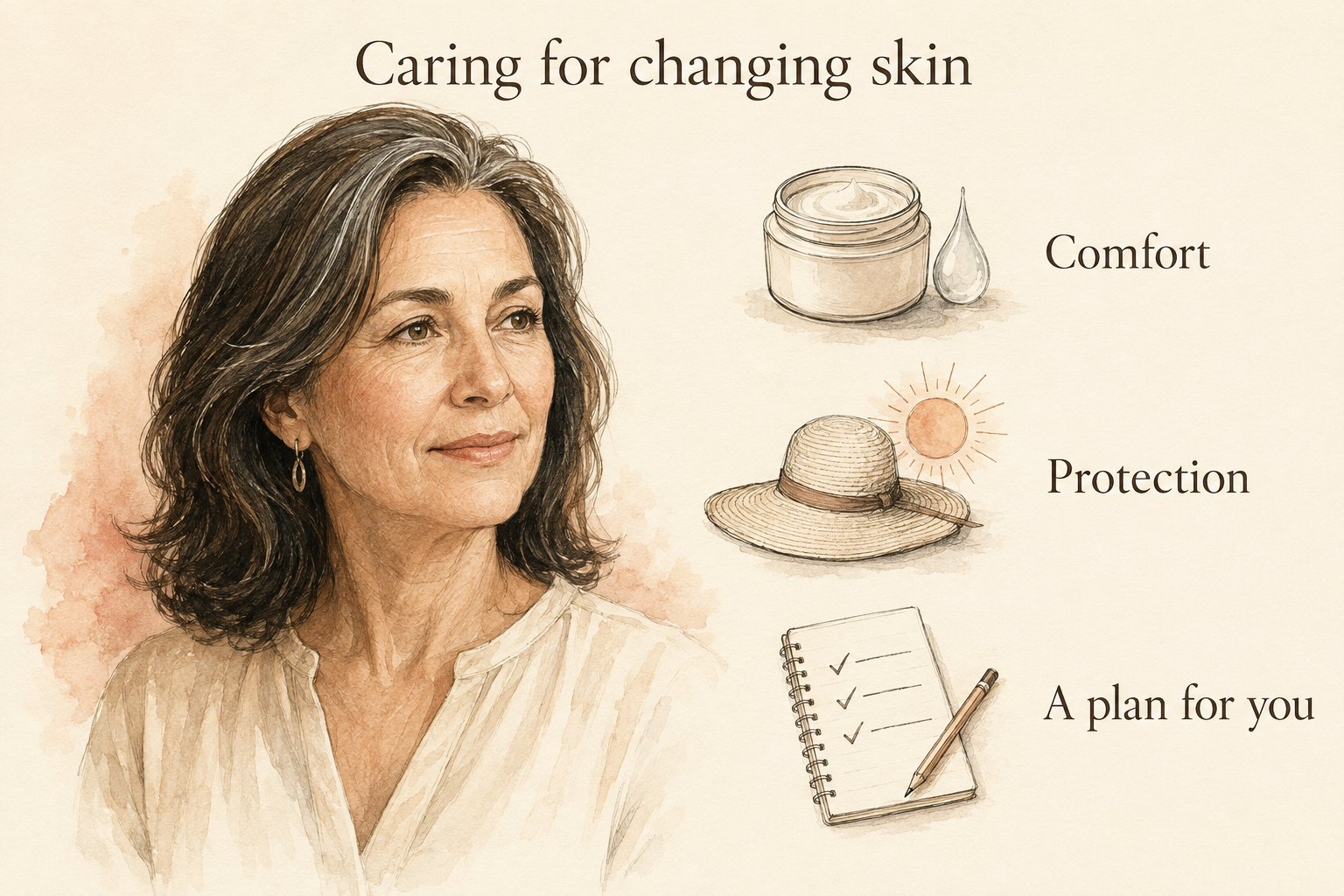
General education only. Individual suitability, expected benefit and risks require assessment. Results vary. The illustration is conceptual and does not depict a patient or treatment outcome.