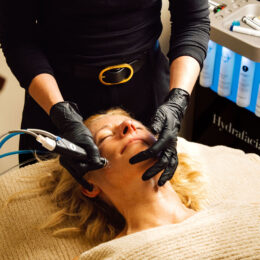
What actually stimulates collagen?
Patient guide by The Centre for Medical Aesthetics (TCMA) · Surry Hills, Sydney · About Dr Amy Chahal
Microneedling, selected radiofrequency and ultrasound devices, and fractional lasers can trigger collagen remodelling. Appropriate skincare can also help with signs of sun damage. Their results, risks and recovery differ. The useful question is which approach could improve your particular concern, and whether that benefit is worth the treatment.

Collagen is part of the picture
Collagen helps give skin its strength and structure. Changes in its amount and organisation contribute to changes in skin quality as we age. But a face also changes through shifts in fat, deeper support and bone. A treatment aimed at skin collagen cannot address all those layers.
That distinction matters if you are noticing a softer jawline, hollowness or a tired appearance. These concerns may look similar in photographs but require different assessments. “More collagen” is not a diagnosis.
At TCMA, long-term planning starts with what you would like to preserve or improve. Looking like the best version of yourself is a personal goal: it might mean smoother texture, a gradual change in firmness, or simply a routine you can sustain while continuing to look like you.
Protecting skin comes first
Sun protection belongs in a long-term skin plan whether or not you choose procedures. In an Australian randomised trial involving 903 adults under 55, daily sunscreen use reduced progression of visible skin ageing over 4.5 years compared with discretionary use. This supports consistent protection; it does not mean sunscreen reverses every existing change. Read the sunscreen trial.
Use sunscreen alongside shade, protective clothing, a hat and sunglasses. Cancer Council recommends all five forms of protection when the UV Index is 3 or above, including broad-spectrum, water-resistant SPF50 or SPF50+ sunscreen. Follow the product directions for application and reapplication. Cancer Council sun protection advice.
Skincare needs to be tolerable to be useful. Retinol may help with fine lines and texture, but irritation can worsen redness or pigmentation. It is not suitable during pregnancy; discuss skincare with your clinician if pregnant, planning pregnancy or breastfeeding. A clinician can advise on options for persistent photodamage. AAD guidance on retinol and retinoids.
How the main procedures differ
| Approach | Potential role | Main trade-off |
|---|---|---|
| Microneedling | Selected texture concerns, fine lines and acne scars | Creates small skin injuries; redness, irritation, pigment change and infection are possible |
| RF microneedling | Selected scarring, texture concerns and mild laxity | Adds heat at depth; carries risks including burns, scarring, unwanted fat loss and nerve injury |
| Ultrasound | Selected mild skin laxity | Heats targeted tissue; discomfort and complications remain possible even without breaking the surface |
| Fractional laser | Selected sun damage, wrinkles and textural changes | Recovery and pigment risk vary substantially with wavelength, intensity and whether treatment is ablative |
These are treatment categories, not interchangeable protocols. A study of one device does not establish the performance of every device in that category.
Microneedling
Fine needles create controlled injuries that initiate a repair response. Small clinical studies have documented changes in skin structure and collagen-related measures. One study used four sessions and assessed changes three months after treatment; that schedule is a research protocol, not a requirement for every patient. Read the microneedling study.
It may be considered when texture or selected scars are the concern. Depth, hygiene and patient selection matter. About SkinPen microneedling at TCMA.
Radiofrequency microneedling
RF microneedling delivers heat through needles into tissue. A small study of 25 women found clinical improvement and increased dermal collagen after treatment, but its authors noted the small sample and lack of long-term follow-up. It cannot predict an individual’s result. Read the clinical and histological study.
More energy or greater depth is not automatically appropriate. In October 2025, the US FDA warned of reported serious complications with certain uses of RF microneedling, including burns, scarring, fat loss and nerve damage. Discuss the exact device, intended depth and risks for your anatomy. Read the FDA safety communication.
Explore Morpheus8 treatment at TCMA and discuss whether it fits your skin concerns and treatment plan.
Ultrasound treatments
Ultrasound devices heat tissue at targeted depths, but their designs differ. Sofwave and other ultrasound technologies should not be treated as the same procedure. A prospective Sofwave study involving 15 people reported improvement in facial laxity at three and six months following two treatments. It was small and did not establish superiority over other treatment categories. Read the ultrasound study.
Keeping the skin surface intact does not make a treatment painless or risk-free. Ask about pain relief, likely recovery and the limits of improvement. Compare Morpheus8 and Sofwave.
Explore Sofwave treatment at TCMA, including assessment and what to expect.
Fractional lasers
Fractional lasers treat small areas within the skin while leaving intervening areas untreated. Ablative treatments remove tissue; non-ablative treatments heat tissue without the same surface removal. A small study of non-ablative 1550 nm laser treatment found collagen changes alongside clinical improvement four months after treatment. It does not establish a universal result for all lasers or skin tones. Read the laser study.
The recovery can include redness, swelling and, with ablative treatment, wound care. Infection, scarring and pigment changes are possible. Ask which wavelength and approach is proposed, rather than choosing by the word “laser”.
What counts as evidence?
A biopsy showing collagen change, a photograph showing smoother skin and a patient feeling satisfied are different outcomes. A useful study explains what was measured, who was treated, the comparison group and how long follow-up lasted.
Many device studies are small, use particular settings and follow patients for months. They can support a treatment’s potential without proving permanent results, a precise percentage improvement for you, or that one device is universally best.
Ask the practitioner to translate the evidence into an expected visible change for your concern. If the realistic result would not meet your goal, that is a reason to reconsider before treatment.

A long-term plan for ageing well
A plan should connect today’s decisions with how you want to look and feel over time. It should also leave room for changing priorities, health, budget and tolerance for recovery.
- Establish a starting point. Discuss the concern in your own words. Consistent photographs can help distinguish texture, pigmentation, laxity and volume change, although they do not directly measure collagen.
- Build a manageable foundation. Address sun exposure, skincare tolerance and active skin problems before adding procedures.
- Choose a defined goal. Agree what improvement would make treatment worthwhile, the likely total cost, possible recovery and alternatives, including no treatment.
- Allow time to assess. Set a review point suited to the procedure. Early swelling can make skin appear smoother and should not be mistaken for the final result.
- Decide again at review. Compare the outcome with the starting point. Continue, change course or pause according to benefit and risk, rather than automatically adding another session.
For someone mainly bothered by uneven tone, pigmentation care may take priority over a tightening device. For someone seeking a substantial lift, repeated skin treatments may not deliver the desired change. Matching the plan to the problem helps avoid a series of procedures that never addresses the main concern.
Ageing well does not require an uninterrupted treatment calendar. Sometimes the best next step is to maintain a simple routine and review later. More about results, maintenance and review.
When the plan needs extra care
Tell your practitioner about medicines, previous procedures, pigment changes, abnormal scars, poor healing and relevant medical conditions. Active infection, an inflamed skin barrier or an unexplained lesion may need assessment or treatment before an elective procedure. Suitability in pregnancy and breastfeeding needs separate discussion.
During perimenopause and menopause, dryness and changes in skin firmness can alter what your skin tolerates and what concerns you most. Reassess the routine and goals rather than simply increasing treatment intensity. AAD guidance on skin during menopause.
After a procedure, follow the specific aftercare instructions and contact the treating clinic promptly about unexpected or increasing pain, blistering, spreading redness, altered sensation or other concerning changes.
What about collagen supplements?
The evidence is mixed. A 2025 analysis of 23 randomised trials found overall benefits in some skin measures, but those benefits were not significant in the high-quality study subgroup or studies without pharmaceutical company funding. Supplements should not be presented as a proven substitute for sun protection or as a way to lift the face. Read the analysis.
This guide focuses on skincare and device approaches. Other medical options require an individual consultation about suitability, alternatives and risks.
Common questions
What is the best treatment to stimulate collagen?
There is no single best treatment. Fine texture, acne scars and mild skin laxity are different concerns. The appropriate option depends on examination, skin tone, medical history, previous procedures and the amount of recovery you can accept.
Can collagen treatments lift a sagging face?
Selected treatments may improve mild skin laxity or texture. They do not reproduce a surgical lift or correct every change in facial fat, deeper support and bone. If substantial lifting is your goal, discuss those limits before committing to a course.
How long does collagen stimulation take?
Remodelling develops over weeks to months. Many device studies assess results around three to six months, but the timing depends on the procedure. Early swelling is not a reliable measure of the final result.
Should I start collagen treatments before I see ageing?
There is no universal age at which procedures become necessary. Sun protection and a sustainable skincare routine are useful foundations. A procedure should address an identified concern with a reasonable prospect of benefit, rather than fear of missing a prevention window.
Do I need a treatment every year?
Not automatically. Review the response, remaining concern, risks and cost before repeating treatment. A long-term plan can include periods with no procedures.
Is more collagen always better?
No. The aim is a useful improvement in skin quality and appearance, not the largest possible injury or an unmeasured promise of more collagen. Excessive treatment can cause harm.
Can darker skin have collagen treatments?
Some treatments may be suitable, but no category is risk-free. Device choice, settings and aftercare must account for skin tone and any history of pigment changes or abnormal scarring.
Related reading
See how collagen stimulation fits alongside lifting and tightening in our illustrated guide to FaceTite vs thread lift vs facelift, with skin care and treatment planning over time.
Explore how the face ages to understand skin alongside deeper facial changes, or read our guide to skin changes during perimenopause and menopause.
Bring the options into one plan.
If you are weighing up several treatments, a Strategy Session with Dr. Amy Chahal can help you see how they fit. Consider cosmetic medicine, skincare and skin treatments together, with a written roadmap to help you age well and an approach to review and maintenance over the years.
For skin treatments and skincare planning, start with a Complexion Consultation with our dermal therapists. The $100 deposit is redeemable against treatment. For one specific medical aesthetic concern, choose a Focused Consultation.
Book Strategy Session with Dr. Amy
Strategy Session · $250 consultation fee, not redeemable against treatment.
Your appointment is confirmed once you successfully complete your online booking through Timely.
Compare consultation options →
General information, not an individual treatment recommendation. All medical procedures carry risk and results vary. Suitability is determined at assessment.