TCMA Sydney · Patient guide
How the Face Ages
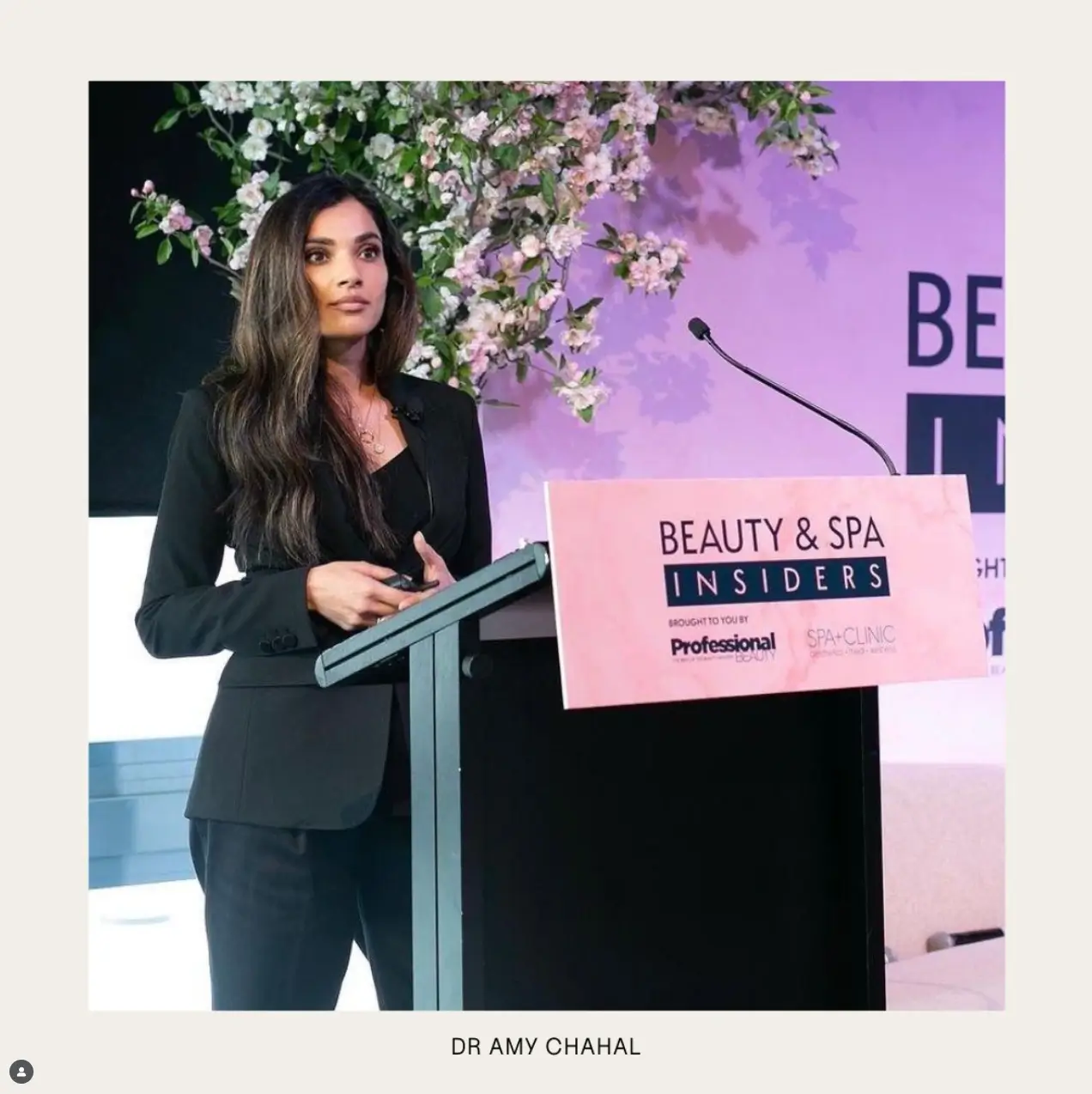
Patient guide by The Centre for Medical Aesthetics (TCMA), Surry Hills, Sydney. Meet Dr Amy Chahal.
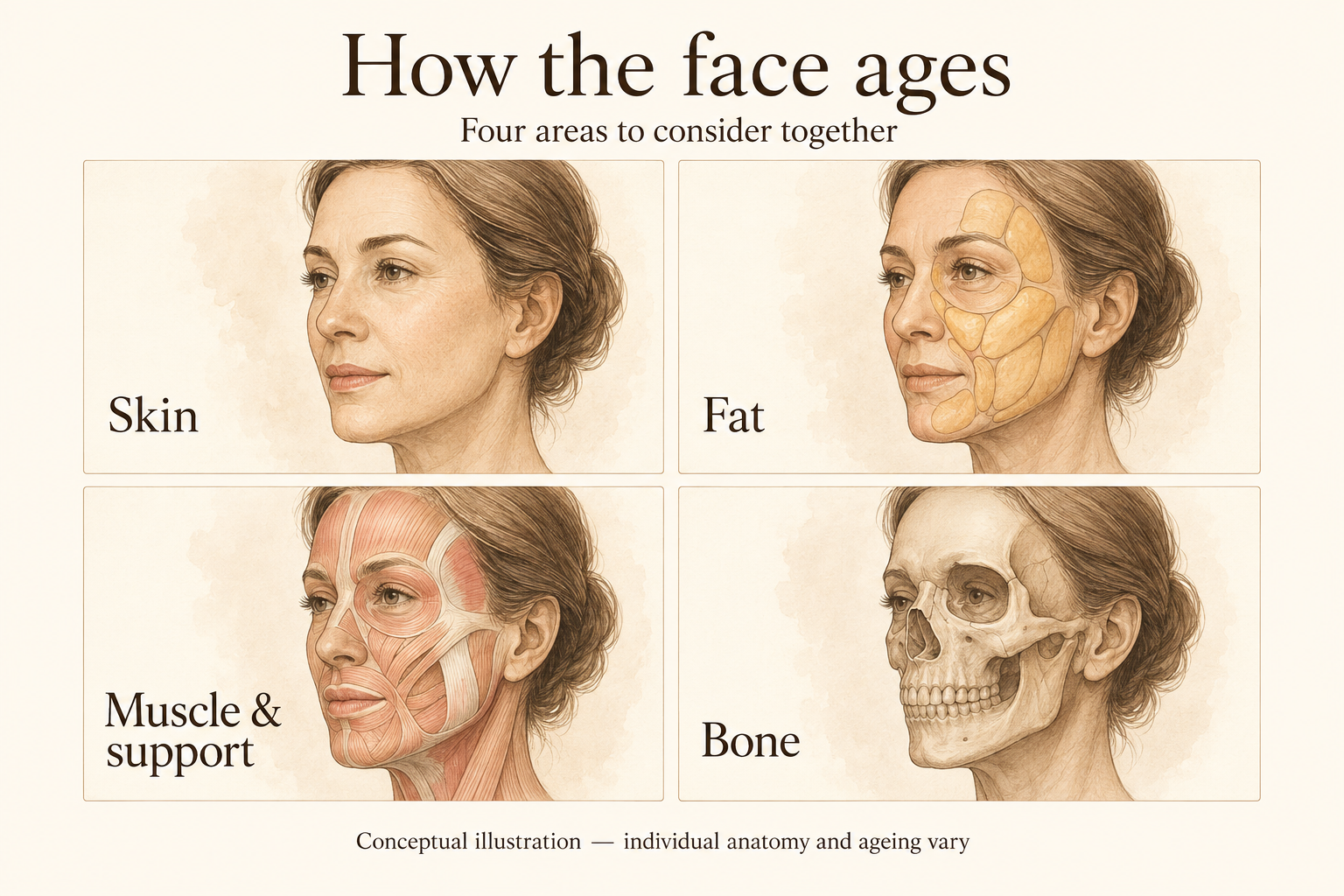
Understanding how the face ages means looking beyond the surface of the skin. Skin quality, facial fat, muscle and connective support, and the underlying bone all contribute to the changes we see over time. Understanding them together helps you make better decisions about caring for your face.
You might notice a softer jawline, less fullness in your cheeks, or skin that feels drier and looks less even. Several changes can contribute to the same concern. A useful plan starts by understanding what is happening, what bothers you and what you want to preserve.
At The Centre for Medical Aesthetics (TCMA) in Surry Hills, Sydney, Dr Amy Chahal’s approach centres on long-term planning: helping you age well and look like the best version of yourself, with realistic expectations and treatment where it has a useful role.

Four areas to consider together
These are useful categories for understanding the face, rather than four separate sheets. Facial anatomy is interconnected, and changes in one area can influence how another looks.
1. Skin: texture, tone and resilience
The skin is where changes in dryness, pigmentation, fine lines and surface texture become visible. Ageing, cumulative ultraviolet exposure and hormonal changes can affect how it looks and feels. Around menopause, some people notice increased dryness and reduced firmness. The American Academy of Dermatology explains these skin changes. For practical skincare and treatment planning, read our guide to skin changes during perimenopause and menopause.
This is an area where consistent care and appropriate treatment can make a worthwhile difference. The priority might be a more comfortable skin barrier, a more even complexion or improvement in fine lines and texture. Choosing a treatment starts with identifying the concern, including checking pigmentation that is new or changing.
2. Fat: fullness, contours and shadows
Facial fat sits in distinct compartments. Ageing does not simply remove the same amount of fat everywhere: volume and its distribution can change differently across the face. Weight changes also influence fullness. A hollow-looking cheek and a fuller lower face can coexist.
A small longitudinal CT study followed 19 people over about 11 years and found changes in both superficial and deep midface fat volumes. It supports looking beyond the surface, although it cannot predict how any individual will age. Read the midface volume study.
If reduced fullness is the main concern, a skin-firming device alone may not address it. Understanding the contribution of volume helps avoid spending time and money on an approach aimed at a different problem.
3. Muscle and connective support: movement and position
Muscles create expression, while connective tissues help organise and support the face. Lines seen during expression may behave differently from creases visible at rest. Changes in the relationships between skin, fat and deeper support can also contribute to folds and a less defined contour.
It is too simplistic to describe all facial ageing as tissues “falling down” or every supporting ligament stretching. Assessment considers movement, tissue position and the face as a whole. A concern may have more than one contributing factor, so a single treatment may address only part of it.
4. Bone: the underlying framework
The facial skeleton also changes with age. Research using CT imaging has identified age-related differences in areas including the eye sockets and jaw. These changes can influence the support and proportions of the overlying tissues. Read the facial skeletal ageing study.
Skin treatments do not rebuild that underlying framework. This matters when setting expectations: better skin quality can be valuable even when deeper structural changes remain. Dental health and any functional concerns deserve appropriate assessment in their own right.
Where aesthetic treatments can help
Appropriate treatment can offer meaningful improvement in a specific concern. The useful question is which part of the concern it can change, how much improvement is realistic, and whether that benefit is worth the recovery, cost and risk for you.
| Main concern | An approach to discuss | What to keep in mind |
|---|---|---|
| Uneven tone or pigmentation | Diagnosis, sun protection and selected pigment treatments | Melasma and sun spots need different planning; not every mark should be treated cosmetically. |
| Texture, fine lines or selected acne scars | Skincare, microneedling, RF microneedling or selected resurfacing treatments | Skin type, scar type, medical history and acceptable downtime affect suitability. |
| Mild skin laxity | Selected ultrasound or radiofrequency treatments | Improvement varies; these do not reproduce surgical lifting or correct every cause of a fold. |
| Hollows, changing fullness or substantial tissue descent | A medical assessment of volume, structure and tissue position | A different approach, referral, or choosing no intervention may be appropriate. |
Morpheus8 and Sofwave in a considered plan
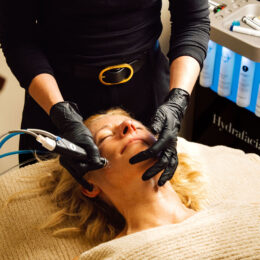
Morpheus8 uses radiofrequency microneedling and may be useful for suitable patients with texture concerns, selected acne scars and mild laxity. Sofwave uses ultrasound and may suit people whose priorities include fine lines and mild laxity with less disruption to the skin surface. Neither is a universal answer to facial ageing.
Both can have a place in a long-term plan when the concern, anatomy and expected benefit align. Treatment settings, timing and follow-up should be individualised. Small clinical studies support potential improvements, but they do not establish a guaranteed result or show that one device is best for everyone.
Recovery and risks need an honest discussion. Energy-based procedures can cause pain, swelling, burns, pigment changes and other complications. RF microneedling has also been associated with reports of scarring, fat loss and nerve injury. The relevance of these risks depends on the treatment and its use. Our Morpheus8 vs Sofwave guide explains the comparison, evidence and safety considerations in more detail.
For an overview of what different approaches can do for skin quality, read What actually stimulates collagen? For uneven tone, see Pico or IPL for pigmentation?
A long-term plan for ageing well
Looking like the best version of yourself is personal. It may mean skin that looks healthier, addressing a change that bothers you, or preserving a feature you have always liked. Planning makes those priorities explicit and gives each decision a purpose.
Start with a clear baseline
Discuss your medical history, skincare, previous procedures, weight changes and what you have noticed. Agree on the main concern and record a baseline, using consistent photographs if appropriate and with consent. This makes later review more useful than comparing unrelated selfies taken in different lighting.
Build care you can sustain
Daily sun protection and a tolerable skincare routine form a practical foundation. A randomised trial found less progression of skin ageing with daily sunscreen use over 4.5 years. Sun protection is an ongoing habit; it does not reverse all existing changes. Read the sunscreen trial.
Your routine should fit your skin and life. More products are not automatically better, particularly when irritation makes you stop using them. General health, dental care, sleep and avoiding smoking belong in the wider picture of ageing well.
Sequence treatment around your priorities
Choose a manageable starting point. Agree on the expected improvement, number of visits, costs, recovery and alternatives before proceeding. Leave time for healing and assessment of the response before adding another intervention. A useful plan can include what to do now, what to revisit later and what needs no treatment.
Review the outcome before deciding what comes next
Maintenance should reflect your response and changing priorities, rather than an automatic schedule based only on your birthday. Ask whether the original concern improved enough to justify repeating the treatment. Adjust the plan as your skin, health, budget and preferences change.
Common questions about facial ageing
Why does my face look different as I age?
Facial ageing involves changes in skin, fat, muscle and connective support, and bone. Their combined effects alter texture, contours and shadows. The pattern varies between people and between different areas of the same face.
Can collagen treatments help an ageing face?
For suitable patients, collagen-stimulating treatments can improve selected concerns such as skin texture, fine lines and mild laxity. They do not replace lost facial bone or reliably correct substantial tissue descent. Assessment helps match the treatment to the main cause of the concern.
Is Morpheus8 or Sofwave better for facial ageing?
Morpheus8 may suit patients with texture concerns, selected acne scars and mild laxity. Sofwave may suit patients whose priorities include fine lines and mild laxity with less disruption to the skin surface. Suitability, recovery, risks and expected benefit matter more than choosing one device as universally better.
What age should I start planning for my skin?
There is no required age to start cosmetic treatment. Sun protection and a sustainable skincare routine are useful foundations. A consultation can help when you notice a change or want advice, without committing you to a procedure.
Why can weight loss make my face look older?
Weight loss can change facial fullness and make existing hollows, folds or skin laxity more noticeable. The effect depends on your starting anatomy, the amount and pace of weight change and skin quality. Stable weight and an individual assessment help inform planning.
Can I improve my appearance and still look like myself?
A considered plan starts with the features you value and specific changes you would like to address. Agreeing realistic goals, sequencing suitable treatments and reviewing the response can help keep decisions aligned with your own appearance and preferences. Results vary.
Plan for the years ahead with Dr. Amy
For a practical comparison of lifting, tightening and ongoing skin care, explore FaceTite vs thread lift vs facelift and how these options fit a plan across different layers.
If several changes are catching your attention, it can help to look at them together. In a Strategy Session with Dr. Amy Chahal, you’ll consider cosmetic medicine, skincare and skin treatments as part of a personal plan to help you age well. Your written roadmap sets out priorities, with review and maintenance in mind as your face, skin and goals change over the years.
For skin treatments and skincare planning, start with a Complexion Consultation with our dermal therapists. The $100 deposit is redeemable against treatment. For one specific medical aesthetic concern, choose a Focused Consultation.
Book Strategy Session with Dr. Amy
Strategy Session · $250 consultation fee, not redeemable against treatment.
TCMA · 240 Riley Street, Surry Hills, Sydney.
Your appointment is confirmed once you successfully complete your online booking through Timely.
Compare consultation options →
For a deeper introduction to Dr Chahal’s planning approach, explore Ageing With Structure — the guide.
This article provides general education. Individual suitability, expected benefit, recovery and risks require a consultation. Treatment outcomes vary.